
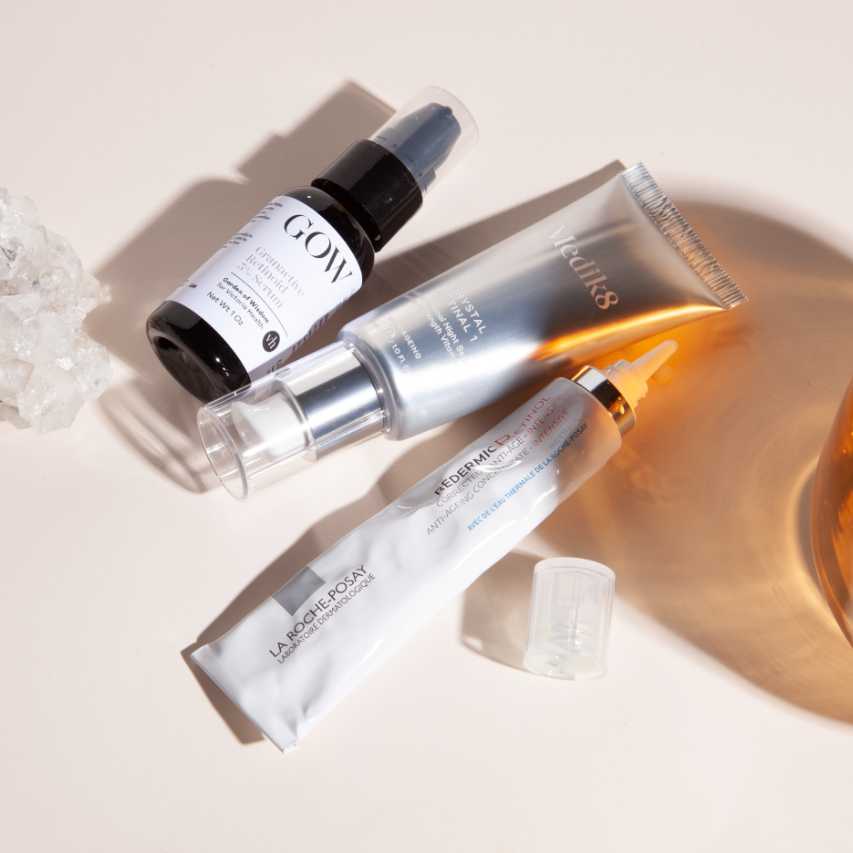
Tretinoin vs Retinol: Key Differences and Safety Considerations
Share
Tretinoin and retinol belong to the retinoid family, but they are not interchangeable products. Choosing between them is not simply a question of wanting faster results or being ready for something stronger.
This guide explains how to approach the comparison, what to ask before starting and why individual advice matters. It is not a recommendation to begin or switch a medical treatment.
What are retinoids?
Retinoids are vitamin A derivatives used in skincare and dermatology. Retinol is one member of this family; tretinoin is another. Different retinoids and formulations have different directions and uses, so a claim about one should not automatically be applied to another.
Retinoids may be options for concerns such as mild acne, pigmentation irregularities or fine lines, depending on the individual product and the person's skin. They are not suitable for everyone.
How should you think about tretinoin?
Tretinoin is a medical treatment, not simply an upgraded cosmetic serum. Discuss whether it is appropriate with a qualified clinician and follow the directions for the treatment you are given.
Persistent or severe acne, scarring and unexplained skin changes need assessment rather than a general recommendation to use tretinoin. Do not start it because a comparison chart promises clearer skin in a few weeks, or change a prescribed treatment based on a skincare article.
How is retinol different as a skincare choice?
Retinol appears in cosmetic skincare formulas, but that does not make every retinol product gentle or suitable for a beginner. The full formula, its directions and your skin's tolerance matter.
A cosmetic retinol product should not be assumed to provide the same effects as a prescribed tretinoin treatment, even with longer use. Percentages across different retinoids are not a reliable shortcut for choosing an equivalent product.
Is retinol always suitable for sensitive skin?
No. Retinoids can cause dryness and irritation. People with skin allergies, significant dryness, redness or inflammation should ask a dermatologist about suitability rather than assuming retinol is a safe starting point.
There is no requirement to work your way from retinol to tretinoin. A routine without either may be more appropriate for your needs.
Pregnancy and other important precautions
Do not use retinol or other retinoids during pregnancy. If you are planning a pregnancy or breastfeeding, ask a qualified healthcare professional about suitable skincare before starting.
Seek individual advice if you have a diagnosed skin condition, use prescription skincare or are unsure how a new product fits your treatment plan. Do not assume that combining retinoids or adding exfoliating treatments will improve results.
Follow the directions for the individual product
There is no single application amount or weekly schedule that should be copied across every retinoid. Follow your clinician's instructions for tretinoin and the manufacturer's directions for a cosmetic retinol product.
Introducing a suitable cosmetic product gradually may help limit irritation, but increasing use is not a goal in itself. Keep the rest of your routine gentle and avoid adding several new treatments together.
If a new cosmetic product causes a skin reaction, stop using it and seek advice if symptoms are significant or persistent. If symptoms occur with a prescribed treatment, contact your clinician for guidance rather than pushing through discomfort or changing the plan yourself.
Keep sun protection part of your routine
Retinoids can make skin more sensitive to the sun. Use a broad-spectrum, water-resistant sunscreen with SPF 30 or higher, following its directions. Reapply at least every two hours outdoors, or sooner after swimming or sweating, and use shade and protective clothing too.
Follow any additional timing and sun-exposure instructions for your specific treatment or product.
Avoid promises about speed or equal results
Results depend on the concern, formulation, treatment plan and individual response. Neither a fixed countdown nor a promise that retinol will eventually be “just as effective” is a useful basis for choosing.
Before starting, ask what the product is intended to do, how to use it, what reactions to watch for and when to review progress. If the concern needs medical treatment, those questions belong with your clinician.
The bottom line
Think of tretinoin and retinol as different options that need different consideration, not rungs on a ladder to better skin. At Bambi Glow, we can help you compare cosmetic product information and directions. Diagnosis and individual treatment decisions belong with a qualified healthcare professional.
This article provides general skincare information, not a diagnosis or personalised treatment advice.